
The City Of All Seasons – Bolu
The City Of All Seasons – Bolu
Bolu a city in the west of the Black Sea region is an important midpoint between the capital city of Ankara
and Turkey’s largest city, Istanbul. Famous for mountain location, green forests and the nearby Lake of
Abant, the city sits on the old highway which connects Istanbul to Ankara as it climbs over Mount Bolu.
While it is officially a city, Bolu creates the lively vibe of a busy market town.
Market day is on Monday when stalls surround the one main shopping street and people from surrounding villages come for their weekly shop. Once a town centered around the poultry trade and forestry, Bolu is now a busy university town, and students from the Abant Izzet Baysal University make an important contribution to the local
economy. Today, Bolu is well known for its cultivation of hazelnuts which grow in abundance around the
town and for its natural soft spring water, ‘kökez suyu’, which is taken by the locals from the many
fountains around town.
Bolutown
The climate of the Bolu Province is typical of the Black Sea Region, with a humid continental climate,
bordering on an oceanic climate, with cold snowy winters and warm summers with cool nights. Being the
mountain city that it is, Bolu is usually cloudy and foggy, creating an atmospheric environment which
contributes greatly to the wonderful, lush, green landscapes that complete the area. An attractive choice
for those who want to experience the other side of Turkey, away from the crowded beaches and
scorching sun. There is much to explore in the city itself, but just a short drive from Bolu will find you in
some of the most beautiful and inspiring spots in Turkey, with a tourist season perfect for the summer
and the winter.
The City’s History
Bolu was once part of one of the Hittite kingdoms around 2000BC and by 500BC, it had become one of
the leading cities of the Kingdom of Bithynia, an ancient region and Roman Province in the northwest of
Asia Minor. In the Ancient Roman era, as is shown by its excavated coins, the town was commonly
called Claudiopolis after Emperor Claudius. It was the birthplace of Antinous, the posthumously deified
favourite of the Roman Emperor Hadrian who was very generous to the city. His name was later added
to that of Claudius on the coins of the city. By 408-50 AD, the city had become part of a great Roman
province called Honorius in honor of Emperor Theodosius II’s son, Honorius.
The city was is known as Hadrianopolis under Byzantine rule, but Turkmens migrating west settled in the city in the 11th century and it was referred to as Boli, a word the Turks used for Polis. In the 14th century, the city fell under
Ottoman rule and the name Bolu was adopted, though it was sometime stilled called Boli. It became the
chief town of the Ottoman administrative division of the Kastamonu Province and had a population of
10,000 inhabitants.
Architecture
Bolu is home to beautiful Ottoman architecture and the many mosques that adorn the city are just some
examples. For the finest example, visit the Kadı Mosque which was built in 1499. The entrance to the
mosque is constructed of ornate kündekari works, an important technique of woodworking which was
developed in Anatolia by the Seljuks. Kündekari is particularly prevalent in mosques acrossTurkey, used
to decorate internal features such as mimbars, cupboards, doors, and window shutters. The Grand
Mosque dates back to 1899 but was originally built by Bayezid I and contains decorations that resemble
embroideries. Other Ottoman mosques in Bolu include the Ilıca Mosque of 1510-11, the Karaköy Cuma
Mosque of 1562-63, another 16th century creating, the İmaret Mosque, and the more recent Tabaklar
Mosque, built in 1897.
The remains of the ancient city of Bithynium have been found on four hills in the city centre. Aside from
the areas of Kargatepe and Uğurlunaip Hill, Hisartepe houses a temple believed to have been built by
the Roman Emperor Hardrian for his lover, Antinous and in Hıdırlıktepe, you can find a tomb and the
remains of a theatre which have been uncovered.
Many marbles with Greek inscriptions and architectural fragments can also be found in and around the
city and the Bolu Museum was established in 1975 to display and protect local artefacts. The centre
functions as both an archaeological and an ethnographic museum with a combination of over 5000
pieces which chronicle the history of the area from Neolithic to Byzantine eras, and over 12,000 historical
coins.
The Mount Bolu Tunnel
This 3.1km long highway passes through the Bolu Mountain and underneath Bolu city. The tunnel was
completed in 2007 as part of the trans-European Motorway project and is part of the Gümüşova to
Gerede Highway. It is a major infrastructure in the area which cost $300 million to complete, providing
three lanes of traffic in each direction, making the journey between Istanbul and the Black Sea region
through to Ankara much quicker and safer. As a result of the construction of the Mount Bolu tunnel,
travellers have no need to climb the mountain, which is often closed in the winter due to ice and snow.
While most people would stop at the roadside restaurants on the mountain rather than venture into town,
the construction of the tunnel has led to a dip in visitor trade and many service stations on the mountain
have closed or moved elsewhere. It does however create a fantastic route for exploring the area outside
of the city.
Lake Abant and Mudurnu
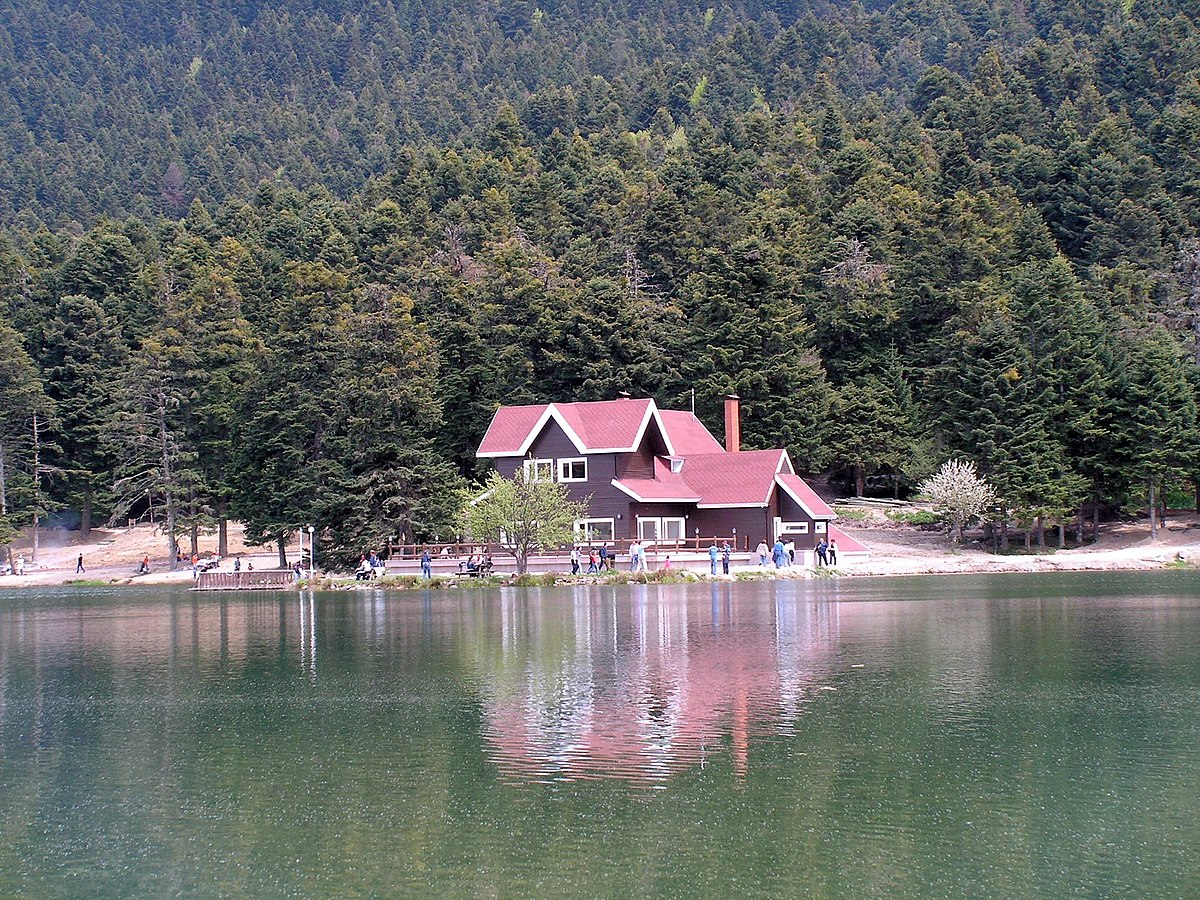
Lake Abant is a freshwater lake formed as a result of a great landslide just 32km from Bolu city. As with
much of the surrounding area of Bolu Province, Lake Abant is a favourite excursion spot for both Turkish
and foreign travellers due to the natural beauty that surrounds it. Home to a large collection of tree
species and wildlife, it is the perfect place for the lovers of nature. You can find varieties of pine trees,
junipers, hazels, and strawberry trees which provide a home for animals such as wild boars, deer, brown
bears, wolves and red foxes. The lake is also filled with the Abant Trout, strictly endemic to this particular
lake, which attracts keen fishermen.
While Lake Abant does have a couple of hotels and guest houses to choose from, many visitors choose
to stay in the nearby town of Mudurnu. The name of the town comes from the Byzantine princess
More and the ruins of the Byzantine castle can still be seen above he town. The center itself is a
historical town where many well preserved period houses from the Ottoman Empire can be found; as a
result, a section of the town has been declared a Historic Preservation District.
You will find a strange statue of a chicken at the edge of town which is an homage to the Mudurnu
Chicken Company, one of Turkey’s largest poultry producers and fast-food chains. The company closed
in 2002 but the statue remains. Many of the workers moved on and the remaining locals now concentrate
their efforts on tidying and restoring the town to attract visitors. There are now many attractions to be
found in Mudurnu aside from Lake Abant including the ‘Babas Kaplıcası”, a mineral water spring with
accommodation in a restored Ottoman wooden bathhouse, the Yildrim Bayed Mosque, built-in 1732 as
part of a complex of dervish lodges and hamam, which is an original Turkish bath with sauna built in
1382 and still functions today.
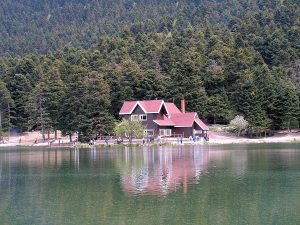
Yedigöller National Park
Also is known as the Seven Lakes National Park, the Yedigöller National Park was established in 1965 and
is best known for the seven lakes formed by landslides. Situated close to the town of Mengen, several
streams flows through the park, some of which have handcrafted bridges across them and small
waterfalls. The Kamankaya moutain peak is within the park and provides incredible views of the scenic
park. There are many trekking paths to enjoy and many interesting abodes, from camping tents and
caravans to bungalows. There are also hot springs here and the ski centers on the peaks are well known
skiing spots in Turkey.
The Köroğlu Mountains
This mountain range rises along the North Anatolian Fault and the Black Sea, crossing the province of
Bolu and is formed of volcanic rock. The highest point of the range is Köroğlu Tepesi, at 2499 meters
above sea level. Two ski resorts are situated within the range, close to the highest peak, Kartalkaya and
Sarialan. The mountains are covered in firs and pines, extensive pastures and picturesque resorts and
alpine cabins.
Kartalkaya
The Köroğlu Mountain Range is also said go bd the scene of the folk legend, Epic of Köroğlu. The story
began to take shape back in the 11th century AD but wasn’t written down until the 18th century. The epic
tells about the life and heroic deeds of Koroghlu, a hero of the people who struggled agains unjust rulers
with Robin Hood chivalry. The tale now exists in many different variations in a number of different Turkic
languages and is often set to music and played at sports games as an inspiration to the competitors.
Azerbaijani composer Uzeyir Hakibeyov created ‘The Opera of Koroğlu with poetry by Mammed Said
Ordubadi which premiered on April the 30th 1937. There was also a Turkish film made based on the epic
called ‘Köroğlu’, made in 1968 and starring famous Turkish actor Cüneyt Arkın.
Mengen and its Famous Cuisine
Situated just 58km from Bolu city center, you will find a rural town which has become famous for its food!
Chefs trained in Mengen can be found in the best hotels across Turkey and the cookery school here has
traditionally trained chefs for the Turkish president in Ankara and other high government officials. Proud
of its culinary roots and of the famous chefs the town produces, billboards and statues of happy chefs
can be found all over the district. Sadly, while the town produces some of the best chefs in the country,
the town itself doesn’t have much to offer in the way of restaurants. A fine dinner of grilled meats and
pilav rice can be eaten with great company and bottles upon bottles of rakı however, but if you should be
lucky enough to be there in September, you may catch a glimpse of the long running, annual
International Mengen Cuisine and Tourism Festival, which attracts chefs from all corners of Turkey.
Mengen
Even without its famous food, Mengen is a stunning place to visit, often used as a weekend retreat for
the big city livers. At the centre of a forested district and set on the largest plain in the mountainous area
that surrounds it, Mengen is a traditional Turkish village, one that hasn’t changed much over the
decades. Hunting is a popular visitor sport and in the summer, the walking trails above the town provide
some of the most spectacular views in Turkey. Menger is also one of the few places left in Turkey where
the tradition of the köçek, male belly dancers, at village weddings remains widespread. The Turkish are
notorious for holding some of the grandest and largest weddings in all of the world and being the
hospitable folk that they are, the whole town will be invited and so would you be too if you were there! A
day trip to Mengen could prove rather fruitful with a glance at Turkey of years ago.
Whatever kind of experience you are looking for in Turkey, Bolu has it all; history, architecture, nature,
hiking trails, mountains, lakes, and even the coast is less than two hours away. You can even be in major
cities Istanbul and Ankara within three hours if you are looking for some grandeur. Whether you want
opportunities for summer hiking and swimming in lakes or you want to take advantage of the many
stunning local ski resorts in the winter, Bolu is the perfect year-round destination.
Author: Maximos Real Estate