

Dual Citizenship in Türkiye: What Law No. 5901 Allows Property Investors

Foreign property buyers usually ask a practical question first: can I obtain Turkish citizenship through investment and still keep my existing nationality? Under Turkish law the short answer is generally yes — Turkish citizenship by investment is typically an additional nationality, not a forced swap. Whether you can keep both passports in real life still depends on your home country’s rules, and the Turkish authorities make the final decision on every file.
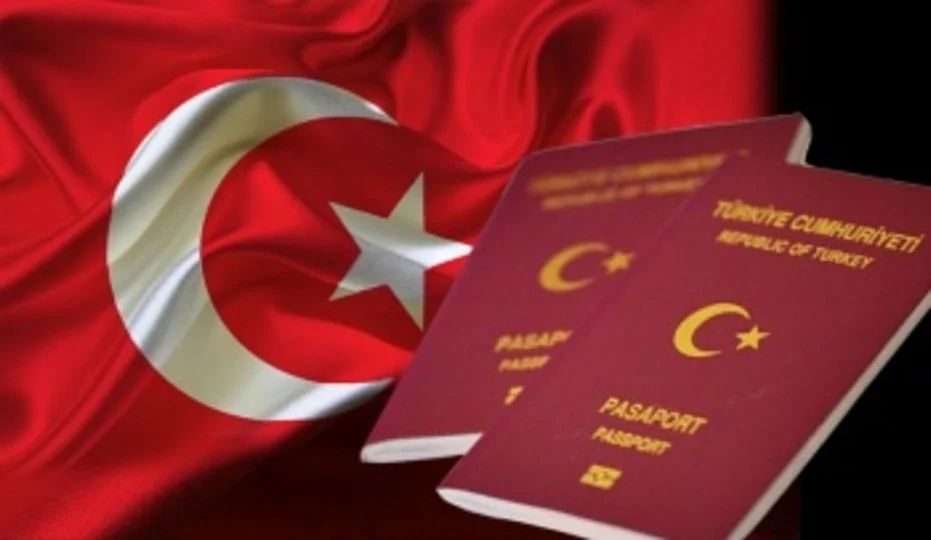
Passport pairings shown on this page are illustrative only and do not mean the guidance applies solely to US citizens — home-country nationality rules differ for every investor.
Short answer: Türkiye recognises multiple nationality under the Turkish Citizenship Law No. 5901. Investors using the exceptional property route in Article 12(b) are not normally required by Turkish law to renounce their first citizenship, to be “released” by their home state, or to obtain home-country permission before applying. The current real-estate threshold is an officially accepted value of at least USD 400,000 with the required three-year no-sale annotation and conformity process. A residence permit is not citizenship, and a Turkish passport is not visa-free access to the Schengen Area or the EU.
Is Turkish citizenship an additional nationality?
For investment applicants, Turkish nationality is generally added to the nationality you already hold. Turkish law does not treat the Article 12(b) property route as a programme that first demands abandonment of every other citizenship. That is different from some foreign naturalisation systems that may require a formal release from a previous nationality before the new one is completed.
Two limits matter immediately. First, Turkish law’s openness does not rewrite your home country’s statute books. Second, exceptional citizenship remains discretionary: meeting the financial and documentary conditions makes a person eligible to apply, never entitled to automatic approval. Our guide to Turkish citizenship by investment covers the full process map.
What Law No. 5901 and Article 44 mean
Law No. 5901 is the citizenship statute. It defines multiple nationality and regulates how Turkish nationality is acquired, recorded, lost and restored. Article 44 is the registry provision most relevant to dual nationals: when a person who has acquired a foreign nationality submits the related documents, and after examination confirms that the records relate to the same person, the population family register can be annotated to show multiple nationality.
Article 44 is about keeping Turkish civil records accurate. It is not a marketing label for “buying two passports,” and it is not the same legal pathway as the property-investment application itself. The wider legal structure of acquisition routes is explained in our practical guide to Turkish citizenship law and property rules.
Notification versus renunciation
These two ideas are often mixed together.
- Notification / documentation for multiple nationality — relevant when a Turkish citizen later acquires another nationality, or when civil records need to reflect dual status. Documents are submitted so the registry can be annotated under Article 44. This is not the same as asking Türkiye for advance permission to naturalise abroad.
- Renunciation / permitted exit from Turkish nationality — a separate formal process under Law No. 5901 for a person who deliberately leaves Turkish citizenship (for example because another country demands it). Exit is conditional, documented and consequential. It is not the normal path for an investor who wants to add Turkish nationality.
If your goal is investment citizenship while keeping your first passport, you are usually discussing addition and record accuracy — not renunciation of Turkish nationality.
Why the home-country law still matters
Türkiye does not normally require an investment applicant to obtain permission from their home country before filing. Turkish authorities decide the Turkish citizenship file under Turkish law. Your original country, however, may restrict dual nationality, recognise it only in limited cases, or treat voluntary acquisition of another nationality as a ground for loss of the first one.
We do not publish definitive conclusions for individual countries such as Pakistan, India or Bangladesh on this page, because those rules change and depend on the person’s category of nationality. When a client asks whether their own country permits dual nationality, Maximos can help them contact or consult that country’s embassy in Türkiye before any payment is made. Never assume that every nationality worldwide can retain both citizenships, and never assume Turkish approval preserves the original nationality under foreign law.
Citizenship by investment is not a golden visa
Marketing language blurs three different statuses:
- Residence permit — permission to stay;
- Long-term / permanent residence — a stronger stay status, still not nationality;
- Citizenship — Turkish nationality, passport eligibility after approval and registration, and political membership of the state.
The investor residence permit linked to the citizenship framework is an early procedural step in many files. It is not a passport and not citizenship. We do not call it a universal “golden visa,” and different residence categories do not have identical legal effects. For the residence track, see permanent residency in Turkey.
The USD 400,000 property-investment route
Under the current official framework, the real-estate route to exceptional citizenship generally requires qualifying property with an accepted value of at least USD 400,000 (or equivalent foreign currency), a three-year no-sale annotation on the title deed, banking and payment documentation, and ministry verification leading to a Certificate of Conformity / eligibility step before the citizenship file proceeds. One or several qualifying properties may generally be combined to reach that threshold where the legal conditions are met.
The older USD 250,000 figure is historical and must not be used for new structuring. Eligibility screening starts on our citizenship eligibility guide. Buyers comparing inventory can also review properties presented as pre-approved for Turkish citizenship applications.
USD 200,000 residence permit versus citizenship
A property-owner residence permit may generally be available when the applicant owns one individual property meeting the applicable current value and location requirements, commonly around USD 200,000. This is a residence status only and does not grant Turkish citizenship or a passport.
Several cheaper properties should not be combined to manufacture that residence threshold. One or several qualifying properties may generally be combined for the USD 400,000 citizenship threshold where the legal conditions are satisfied.
USD 200,000 for one property concerns the property-owner residence route. USD 400,000, potentially combined across qualifying properties, concerns the exceptional citizenship route. These are different legal systems with different authorities and outcomes.
How Maximos and the cooperating lawyer check the file
Maximos Real Estate has worked in Türkiye for more than 20 years, completed more than 800 real-estate transactions, and assisted more than 1,000 people with citizenship-related property transactions and applications. We work with a qualified Turkish citizenship lawyer who has completed more than 1,000 citizenship cases. All citizenship applications handled through our cooperation have been successfully completed to date. This reflects our practical case record, not a guarantee: every application remains subject to document verification, security review, legal requirements and the decision of the Turkish authorities.
In a typical file the workflow is:
- The client gathers civil and identity documents in their home country.
- Documents may be apostilled, translated and sent to Türkiye before travel.
- Maximos first checks document readiness and property / investment suitability.
- The cooperating lawyer then reviews the papers and prepares the legal file.
- The lawyer handles document preparation, translations, application filing, appointments and security-file coordination.
- Before the file is accepted, the competent legal officer at the Turkish citizenship authority examines and accepts the application.
- Property valuation, title-deed checks, DAB / payment records and official documents are prepared through official channels.
- Police-clearance certificates, birth certificates and civil-status documents may be checked or cross-verified by the competent authorities as part of their review.
Required paperwork is detailed in documents required for Turkish citizenship by investment.
Document verification and refusal risks
False, forged or materially misleading documents can cause refusal and serious consequences. They are not the only risk. Files can also fail or stall because of eligibility problems, valuation shortfalls, payment or title-deed defects, incomplete civil documents, security or criminal-record issues, and procedural mistakes. We do not claim that every document is always automatically cross-checked between countries through one invisible system; competent authorities apply the checks required for the file in front of them.
Before full payment where possible, Maximos reviews the valuation report, title-deed and seller history, property eligibility, payment route, DAB and bank documentation, and whether supporting civil documents beyond the passport — including marriage certificates and police-clearance records — can be presented cleanly to the lawyer and the authority. Practical prevention steps are collected in our rejection-prevention guide.
Personal attendance and the practical two-day visit
Property coordination, tax-number procedures, bank procedures and much document preparation can often be arranged remotely.
Based on our current practical experience, applicants should plan to attend the relevant Turkish citizenship office in Türkiye personally for identity checks and fingerprints. Earlier embassy-based alternatives may not reflect the current procedure, so the applicable authority should be confirmed before travel.
Applicants should plan for approximately two days in Türkiye. That is a practical attendance window, not a statutory “two-day residence qualification,” and it must not be confused with the multi-year residence conditions used in general naturalisation. Where the authority requires personal appearance, the relevant applicants must be seen. Adult dependants and other family members may have different attendance requirements.
Family members and transmission
Turkish investment citizenship creates Turkish nationality. Once validly acquired, it is generally lifelong, subject to Turkish loss and revocation provisions. It is not a temporary residence card.
That does not mean every relative is automatically included or that every child “inherits” citizenship without process. Children may acquire Turkish citizenship by descent under the applicable rules when parentage and registration conditions are met. Spouses and dependent children must satisfy the inclusion and application conditions of the file. Family members are not simply added without legal requirements. Details are on our family and dependants guide.
Military and tax cautions
Turkish citizenship may create military-service obligations for eligible male citizens. Previous service in another country does not automatically resolve every Turkish obligation, while alternatives such as bedelli askerlik depend on the person’s age, status and the rules in force at the time.
Children who become Turkish citizens may later fall under Turkish military rules when they reach the relevant age; individual cases need lawyer verification. Tax residence is not the same as citizenship. Holding a Turkish passport does not, by itself, decide worldwide income-tax residence. Presence, centre of life and treaty rules matter. We do not publish unverified tax-exemption claims on this page; tax questions belong with a qualified tax adviser.
Passport and travel access
A dual national may lawfully use different passports for different journeys where each country’s rules allow it — for example travelling between the home country and a third country on the documents those countries accept, and using a Turkish passport for entry into Türkiye where applicable. That is practical passport management, not a universal entitlement and not a way to rewrite border law.
Turkish passport access varies by destination. Some places allow visa-free entry or an ETA, others use e-visa or visa on arrival, and many still require a prior visa. Ordinary Turkish passports do not enjoy visa-free short stays across the Schengen Area or the EU. We do not promise easier Schengen approval, do not claim nearly 200 visa-free countries, and do not hardcode destination lists here. For travel-facing discussion see benefits of the Turkish passport. Clients sometimes later use Turkish nationality in other immigration applications; every foreign application is assessed independently.
Anonymised examples from practice
These sketches reflect patterns we see in real files. Details are generalised to protect clients.
- Family keeping the first passport — A couple bought a qualifying Istanbul property after valuation and title checks, completed banking documentation, and filed through the cooperating lawyer while retaining their original nationality on the Turkish side. Home-country dual-nationality questions were raised with their embassy before payment.
- Document repair before filing — An applicant’s police-clearance timing and apostille chain were wrong for the destination authority’s expectations. The lawyer rebuilt the civil pack before submission rather than forcing a fragile appointment.
- Residence versus citizenship choice — A buyer considering a lower-budget coastal flat was advised that combining several cheaper units would not manufacture the property-owner residence threshold, while a single conforming citizenship property could support an Article 12(b) strategy if the USD 400,000 evidence chain was clean.
Frequently Asked Questions
Does Turkish citizenship by investment require me to give up my current nationality?
Under Turkish law, generally no. Investment citizenship is typically an additional nationality. Your home country may still restrict dual nationality, so that side must be checked separately.
Do I need permission from my home country before applying in Türkiye?
Turkish authorities do not normally require home-country permission as a condition of the Turkish investment file. If you need certainty about your original nationality, consult that country’s embassy or qualified counsel before paying for property.
What is Article 44 of Law No. 5901?
Article 44 allows Turkish civil records to be annotated for multiple nationality after the person submits foreign-nationality documents and identity matching is completed. It is a registry mechanism, not the property-investment application itself.
Is the USD 200,000 property route the same as citizenship?
No. The commonly discussed one-property residence threshold around USD 200,000 concerns a residence permit. Citizenship through property uses the separate USD 400,000 exceptional route, where qualifying values may generally be combined when legal conditions are met.
Do I have to live in Türkiye for years to qualify through investment?
Article 12(b) does not impose a multi-year residence condition like general naturalisation. You must still attend in person for required citizenship formalities and fingerprinting. Plan for about two practical days in Türkiye — not a statutory two-day residence qualification.
Can my spouse and children be included automatically?
No. Spouses and dependants must meet inclusion and application conditions. Children may later acquire citizenship by descent under applicable rules, but family members are not added without process.
Does a Turkish passport give visa-free Schengen travel?
No. Ordinary Turkish passports still require visas for short stays in Schengen/EU countries. Passport access varies by destination and changes over time.
Can Maximos guarantee approval?
No. We report strong past completion through our lawyer cooperation, but Turkish authorities decide each file. Clean property evidence and honest documents reduce risk; they do not create entitlement.
Official references
For primary-source confirmation of the rules discussed above, consult:
- Invest in Türkiye: Acquiring Property and Citizenship
- Nüfus and Citizenship Affairs (NVI): Multiple Citizenship under Article 44
This article is general information for property investors based on publicly stated legal frameworks and Maximos Real Estate’s practical experience working with a qualified Turkish citizenship lawyer. It is not legal, tax or immigration advice for any specific nationality combination. Citizenship, registry, military and tax outcomes depend on the facts of each file, on current official practice, and on the final decision of the competent Turkish authorities.