

Documents for Turkish Citizenship by Investment (2026)
Most Turkish citizenship applications that stall do not fail on eligibility — they fail on paperwork. A birth certificate without an apostille, a passport that expires mid-process, or a marriage record where the same name is spelled two different ways can stop a file cold. Since 2005, our teams in Istanbul and Antalya have guided more than 500 families through property purchase and the citizenship application that follows, and the most common cause of delay we see is not the investment itself but the documents that accompany it.
This guide covers the documentation side of Turkish citizenship by investment in full: what you need, how it must be prepared, and the specific mistakes that send applications back. It does not cover the investment threshold, the application timeline, or the full process walkthrough — see our Turkish Citizenship by Investment guide for that overview. If you are still confirming whether you qualify through the property route, read our Turkish Citizenship Eligibility handbook first. What follows assumes you have decided to proceed and now need to get the file right the first time.
Documents Required for Turkish Citizenship at a Glance
Essential documents
- Passport
- Birth certificate
- Police clearance certificate
- Biometric photographs
- Property valuation report
- Bank transfer receipts
- Investor residence permit documents
If applicable / optional
- Marriage certificate (if applicable)
- Power of attorney (optional)
Use this table as a quick reference before you read the detailed sections below. Most items must also be apostilled at source and translated by a sworn translator in Turkey; family and remote-purchase cases may require additional papers.
Required Documents for Turkish Citizenship by Investment
A Turkish citizenship application is a single file submitted to the General Directorate of Population and Citizenship Affairs, but it is assembled from documents that come from several different places: your home country, your home country’s foreign ministry or a Turkish consulate, the Turkish land registry, your Turkish bank, and a sworn translator in Turkey. Each of those sources has its own format, its own validity period, and its own opportunity for error. For how the qualifying investment is defined and verified, see our Turkish Citizenship by Investment guide.
Broadly, the file divides into four groups. Personal documents establish who you are. Property documents prove the qualifying investment. Family documents bring your spouse and children onto the same application. And a set of procedural documents — translations, apostilles, residence records and, in many cases, a power of attorney — make the rest legally usable in Turkey.
The principle that governs all of them is consistency. The citizenship authority cross-checks names, dates and parentage across every document in the file. A discrepancy that seems trivial to you — a middle name present on one document and absent on another, a date written day-first on one and month-first on another — is the kind of thing that generates a request for correction and adds weeks. Getting the documents individually correct is not enough; they must agree with each other.
Personal Documents
These are the documents that identify the main applicant.
Passport. A valid passport is the foundation of the file. In practice the issue is not whether you have one but how long it remains valid. We strongly advise that your passport have well over a year of validity remaining when you begin, because a passport that expires while the application is in progress forces a mid-process update and can invalidate translations already made against the old document. If your passport is close to renewal, renew it before you start, not during. The passport will also need to be translated and notarised in Turkey.
Birth certificate. This is the document that causes more trouble than any other, because many applicants have never needed an apostilled, translated copy of their own birth certificate before. It must show your full parentage and it must match the parentage shown on your other records. Older certificates, hand-written certificates, or short-form extracts that omit parents’ names are frequently rejected. Order a full long-form certificate from the issuing authority in your home country, then have it apostilled before it leaves that country — doing this in the wrong order is one of the most common and most expensive mistakes, covered in detail below.
Police clearance certificate. A criminal-record / police clearance certificate from your home country — and from any country where you have recently held long-term residence — is part of the file. Like your birth certificate, it is a foreign civil document, which means it must be apostilled at source and then translated by a sworn translator in Turkey. Two practical points catch people out. First, the certificate must not be older than three months at filing — so obtaining one too early in the process can mean it expires before you submit. Second, the name on it must match your passport exactly. Order it at the right moment, not at the start and not as an afterthought, and apostille it before it leaves your country.
Photographs. Biometric photographs to Turkish specification are required — typically recent, white-background, and in the quantity the authority requests at the time of filing. They must not be older than six months at filing. These are inexpensive and easy, but use photographs taken in Turkey to the correct standard rather than bringing prints from home that may not conform.

Property Purchase Documents
This group proves that a qualifying property investment exists. We do not restate property-route qualification rules here — see our Eligibility handbook for whether your investment qualifies — but the documents that evidence it are as follows.
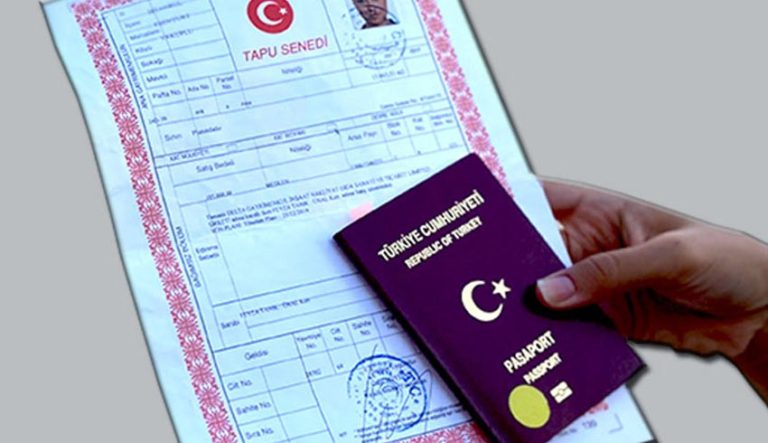
Title deed (TAPU). The TAPU is the official ownership record issued by the Land Registry Directorate. It must be in the applicant’s name, and the required no-sale restriction — the annotation preventing sale of the property for the mandatory holding period — must be correctly recorded against it. A TAPU issued in a slightly different name format than your passport, or one where the no-sale restriction was not properly entered at registration, is a serious problem precisely because it is hard to fix after the fact. This is where working with an experienced agency matters: the time to get the TAPU right is at the moment of registration, not when the citizenship file is assembled.
Valuation report. An official property valuation prepared by a licensed expert is mandatory, and it must not be older than three months at filing. The report must be commissioned from an authorised valuation company and registered in the official system. Buyers sometimes assume an old appraisal or the developer’s stated price will suffice; it will not. The valuation must be current, official, and tied to the specific property.
Bank transfer receipts and proof of payment. The authority requires evidence that the purchase funds moved through the Turkish banking system in the correct manner, including the bank receipts and, where applicable, the foreign-currency purchase document. Cash payments, informal transfers, or payments routed in a way that cannot be traced through a Turkish bank do not satisfy this requirement. Keep every receipt from the moment funds enter Turkey; reconstructing a payment trail after the fact is far harder than retaining it as you go.
Documents for Spouse and Children
One of the practical advantages of the investment route is that your immediate family is included in the same application. Your spouse and children under eighteen are naturalised alongside you — but only if their documents are present and consistent.
Marriage certificate. Required to bring a spouse onto the application, and it must be apostilled and translated like every other foreign civil document. The most common failure here is a name mismatch: a spouse whose name on the marriage certificate does not exactly match the name on their passport, often because of transliteration differences or a maiden-name/married-name discrepancy. These must be reconciled, sometimes with a supporting affidavit, before filing.
Children’s birth certificates. Each child’s birth certificate must show both parents and must match the parents’ own documents. The recurring problem is parentage records that do not align — a father’s name spelled one way on his passport and another way on the child’s birth certificate, or a child’s certificate that omits one parent. Because the authority is establishing a legal family relationship, these records are scrutinised closely.
Custody or consent documentation may be required where a child’s situation involves a single parent, a deceased parent, or shared custody from a previous relationship. If your family structure is anything other than two married parents and their shared minor children, raise it early, because the supporting documentation can take time to obtain.
Translation and Apostille Requirements
Every foreign document in the file must be both legalised and translated, and the order in which you do these two things is critical.
Apostille first, in the issuing country. Turkey is party to the Hague Apostille Convention, so documents from other member countries are legalised by an apostille — a standardised certificate attached by the competent authority in the country that issued the document. This must be done in the country of origin, before the document is brought to Turkey. Applicants routinely arrive in Turkey with a clean birth certificate and only then discover it needs an apostille from back home, which means either a return trip, a courier process, or a power of attorney to someone in the home country. Apostille each civil document — birth certificate, marriage certificate, police clearance, and any others — while you still have access to the issuing authority.
For non-Hague countries, the apostille route is unavailable and documents must instead be legalised through the consular chain: certification by your own foreign ministry followed by endorsement at the Turkish consulate. This is slower and should be started well in advance.
Translation second, by a sworn translator in Turkey. Once a document is apostilled, it is translated into Turkish by a sworn (yeminli) translator and the translation is notarised by a Turkish notary. Translations done abroad, or by an unsworn translator, are generally not accepted. Crucially, the apostille itself should be in place before translation, so the translator renders the complete, legalised document — translating first and apostilling later often means paying for the translation twice.
The transliteration of names in translation deserves particular attention. Your name will be rendered into the Latin alphabet as it appears in your passport, and that rendering must then be used consistently across the entire file. A single document where the translator chose a different spelling can trigger a discrepancy query. Where names contain non-Latin characters, the spelling used in the passport should become the reference used consistently throughout every translation and supporting document.
Residence Permit Documents
Applicants need an investor residence permit card as part of the citizenship file. The residence permit application runs in parallel with the citizenship application — a separate but linked step, not something that waits until citizenship is approved. Supporting paperwork typically includes proof of address in Turkey, valid health insurance for the relevant period, and the biometric and application records from the residence process itself. When you attend in person for biometrics, that same visit is usually when the investor residence application is completed; the physical permit cards are typically issued within about two days. Citizenship is decided separately — the grant commonly follows three to six months after the citizenship application is submitted. Because residence and citizenship are administered as related but separate procedures, it is easy to assume a document submitted for one is automatically on file for the other — it is not. Keep your own complete copies of everything submitted during the residence process; you will frequently need to present them again. Ensure your investor residence permit remains valid across the citizenship review period.
Power of Attorney Documents
A power of attorney (vekaletname) is what allows your representative in Turkey to act on your behalf — registering the property, handling bank formalities, and progressing paperwork when you cannot be physically present. For international buyers who cannot remain in Turkey throughout the process, a properly drafted power of attorney is often what makes the whole transaction practical.
It must be specific enough to authorise the acts required: a vaguely worded POA that does not clearly cover property registration or the citizenship application can be refused at the point of use, which is the worst possible moment to discover the problem. If executed at a Turkish notary, your passport and a sworn translation are needed; if executed abroad at a Turkish consulate or before a foreign notary, it must itself be apostilled and translated. We prepare the scope of the power of attorney against the specific transaction so it covers everything it needs to and nothing it should not.
Documents Required Without Visiting Turkey
It is entirely possible to purchase property and progress most of the citizenship documentation without setting foot in Turkey, and a significant share of our international buyers do exactly that. The mechanism that makes it work is the power of attorney, supported by the Turkish consular network in your own country.
With a properly scoped power of attorney, your representative in Turkey can complete the property purchase, register the TAPU, open the necessary bank account, handle the transfers and commission the valuation on your behalf. The POA itself can be executed remotely — either at a Turkish consulate or embassy in your country, or before a local notary and then apostilled. Executing it at a Turkish consulate is often the cleaner route, because the document is produced in the correct form from the outset.
Your foreign civil documents — passport, birth certificate, marriage and children’s certificates, and the police clearance certificate — are apostilled in your home country and can be couriered to your representative, who arranges the sworn translations in Turkey. This means a fully remote purchase is achievable: contracts signed under power of attorney, funds transferred through the banking system, and the property registered in your name without you travelling.
What generally cannot be delegated is the part of the process requiring you in person. Biometrics — fingerprints and photographs for the investor residence and citizenship records — require a personal appearance. Most applicants plan a single visit of about two days: enough to complete biometrics, file the parallel investor residence permit application, and collect the residence permit cards before leaving. Citizenship is decided separately, typically three to six months after the citizenship application is filed. The new passport, once citizenship is granted, can usually be collected abroad through a Turkish consulate, so the final document does not require a further trip to Turkey.
In practice, the efficient model is: appoint a power of attorney early, complete the purchase and documentation remotely, and reserve one two-day visit for biometrics and the investor residence permit step. We structure exactly this arrangement for buyers who cannot be in Turkey throughout, so the in-person requirement is reduced to the minimum the law actually demands.
Why Turkish Citizenship Applications Are Delayed or Rejected Because of Documents
After hundreds of files, we can say plainly that the investment almost never causes the problem — the documents do. It is worth separating two outcomes. Most documentation errors cause delay: the authority issues a correction request, and weeks are lost while the document is fixed and resubmitted. A smaller number cause outright rejection, usually where a document cannot be reconciled at all or a legal relationship cannot be established. Nearly every one of the errors below is avoidable with sequencing and attention before filing.
Expired passport. A passport that lapses mid-process forces a mid-stream update and can invalidate translations already made against it. If yours is anywhere near renewal, replace it before you begin — not during.
Short-form birth certificate. Extracts that omit parents’ names are the most common civil-document rejection we see. The authority needs full parentage to establish your record and your children’s. Always order the complete long-form certificate, never an abbreviated extract.
Apostille done after translation. The single most disruptive error. A document translated in Turkey and only then sent home for apostille almost always has to be re-translated, because the apostille itself must be part of the legalised, translated document. Apostille at source first, translate in Turkey second.
Inconsistent names. The same applicant appearing under slightly different spellings across passport, birth certificate, marriage certificate and their translations. The authority cross-checks names across the entire file; any divergence triggers a query. Treat the passport spelling as the master and align everything to it.
Wrong or mismatched parent names. A father’s name spelled one way on his passport and another on a child’s birth certificate, or a child’s certificate missing a parent. Because these documents establish a legal family relationship, they are scrutinised closely and mismatches can block a child from being included — the kind of error that causes rejection rather than mere delay.
Missing bank receipts. Without a traceable record that the purchase funds moved through the Turkish banking system, the investment cannot be properly evidenced. Cash or untraceable transfers, or receipts not retained, leave a gap that is very hard to fill after the fact. Keep every receipt from the moment funds enter Turkey.
Expired valuation report. The official property valuation must not be older than three months at filing. One obtained too early — or relied upon from an earlier stage of the purchase — can lapse before submission and must be redone. Time the valuation so it is within the three-month window when you file.
Police clearance obtained too early or un-apostilled. The clearance certificate must not be older than three months at filing, so requesting it at the very start of a months-long process often means it expires before submission — and, like every foreign civil document, it must be apostilled at source rather than overlooked.
An inadequate power of attorney. A POA too narrow to cover property registration or the application itself, discovered only when a representative tries to act on it. Scope it to the transaction from the outset.
The common thread is sequence and consistency: legalise before you translate, keep every name and date in agreement across the file, and watch the validity windows on anything that expires. This is precisely the part of the process where an experienced agency outperforms a checklist — we assemble the file knowing where it tends to break, and fix the order before it becomes a delay.
Document Validity Periods
Several documents in the file carry their own expiry or freshness requirement, and a citizenship application can take months from purchase to submission. The most avoidable delays come from a document that was perfectly valid when obtained but lapsed before filing. Use the timing considerations below to sequence the file rather than gathering everything at once.
| Document | Timing consideration |
|---|---|
| Passport | Prefer well over one year of validity remaining at the start; renew first if close to expiry. |
| Police clearance certificate | Must not be older than 3 months at filing. Obtain it close to submission, not at the very start. |
| Property valuation report | Must not be older than 3 months at filing. Commission it close to submission so it does not lapse. |
| Investor residence permit | Application runs parallel to citizenship. Permit cards are usually issued within 2 days of your in-person visit; keep valid while citizenship is reviewed (grant typically 3–6 months after filing). |
| Biometric photographs | Must not be older than 6 months at filing; must meet Turkish biometric specification. |
The practical rule: identify everything in your file that has an expiry date, note its window, and plan the order of collection backwards from your expected filing date.
Frequently Asked Questions
Do I need to apostille my documents before bringing them to Turkey?
Yes, if your country is a member of the Hague Apostille Convention. The apostille must be obtained in the issuing country before the document is translated in Turkey. If your country is not a Hague member, documents are legalised through the Turkish consulate instead.
Can multiple foreign documents be apostilled together?
Yes. Applicants usually prepare their birth certificate, marriage certificate, children’s certificates and police clearance certificate together in the same apostille batch before sending them to Turkey for sworn translation. Planning the apostille sequence correctly saves both time and unnecessary courier costs.
Can my documents be translated in my home country?
Generally no. Documents must be translated into Turkish by a sworn translator in Turkey and notarised by a Turkish notary. Translations prepared abroad are typically not accepted.
What happens if my passport expires during the application?
An expired passport forces a mid-process update and can invalidate translations made against the old document. Renew well before applying if your passport is close to expiry, and ensure it has comfortable validity remaining when you begin.
Which documents have an expiry or validity window?
The property valuation report and police clearance certificate must not be older than three months at filing, biometric photographs must not be older than six months, and residence permits and passports have their own expiry dates. Plan the sequence so none of these lapse before filing.
My name is spelled differently on two of my documents. Is that a problem?
Yes. The authority cross-checks names across the whole file, and inconsistencies generate correction requests. Use the spelling in your passport as the reference and reconcile every other document — sometimes via a supporting affidavit — before filing.
Why is my birth certificate being rejected?
Usually because it is a short-form extract that omits parents’ names, is missing its apostille, or shows parentage that does not match your other records. Order the full long-form certificate, apostille it at source, and check it agrees with your passport and your children’s documents.
Do I need a police clearance certificate, and when should I get it?
Yes. A criminal-record certificate from your home country — and from any country of recent long-term residence — forms part of the file, apostilled at source and translated in Turkey. It must not be older than three months at filing, so time it accordingly: not at the very start of the process, and not left until the last moment. Match the name on it to your passport exactly.
Can my spouse and children be included in my application?
Yes. Your spouse and children under eighteen are included in the same application, provided their documents — marriage certificate, children’s birth certificates — are apostilled, translated, and consistent with the main applicant’s records. For who qualifies on the property route, see our Eligibility handbook.
What documents prove the property investment?
The title deed (TAPU) in your name with the required no-sale restriction recorded against it, an official and current valuation report, and bank receipts evidencing that the purchase funds moved through the Turkish banking system.
Do I need to be in Turkey for the whole process?
Not necessarily. A properly drafted power of attorney allows your representative to handle property registration, bank formalities and paperwork on your behalf, and most documents can be prepared remotely. Biometrics and the investor residence permit application generally require one in-person visit of about two days; citizenship is usually granted three to six months after the application is filed. The new passport can usually be collected at a Turkish consulate abroad.
What is a sworn (yeminli) translator and why does it matter?
A sworn translator is officially authorised to produce legally valid translations in Turkey, which are then notarised. Only these translations are reliably accepted; an unsworn or foreign translation will usually be refused.
Are bank receipts really necessary if I can show the purchase contract?
Yes. The contract proves agreement; the bank receipts prove the funds actually moved through the Turkish banking system in the required manner. Both are needed, and the payment trail must be traceable.
What if my marriage or birth certificate is very old or handwritten?
Older, hand-written or non-standard certificates are often rejected. Request a current, full, machine-printed version from the issuing authority, then apostille and translate it.
How many photographs do I need and what type?
Biometric photographs to Turkish specification are required in the quantity requested at filing, and must not be older than six months. Have them taken in Turkey to the correct standard rather than bringing prints from home.
What is the most common mistake that delays applications?
Apostille done in the wrong order — translating a document in Turkey before it has been apostilled at source — followed closely by documents expiring mid-process and name inconsistencies across the file.
Does Maximos handle the documentation for me?
Yes. We have managed property purchase and the accompanying citizenship documentation for more than 500 families since 2005, from offices in Istanbul and Antalya. We coordinate the TAPU registration, valuation, sworn translations, power of attorney and the assembled file so the documents are correct, consistent and complete before submission.