

Property Maintenance in Turkey
A Turkish home left unattended for weeks or months does not stay static. Humidity builds in closed coastal apartments, irrigation timers fail in villa gardens, and a small leak under a sink can stain ceilings before anyone notices. For owners based abroad, maintenance is not an optional extra — it is how the property remains usable, insurable, and fit to let or resell.
This guide covers routine upkeep, utilities, repairs, insurance, and remote coordination for foreign owners. It complements the wider ownership path in our Property Management in Turkey guide. It does not promise fixed response times, rental performance, or financial outcomes.
Why Property Maintenance Matters
Maintenance preserves function, not just appearance. In Mediterranean and Aegean climates, warm wet winters and hot dry summers stress buildings differently from northern Europe: external paint fades faster near the sea, aluminium and stainless fittings can corrode in salt air, and closed interiors without airflow develop mould on grout, seals, and fitted wardrobes.
Neglect also creates cost spikes — a €200 gutter clearance is cheaper than ceiling replastering after blocked drainage. For vacant homes, the risk is silent damage: tripped breakers, empty fridge lines, pool pumps running dry, or terrace drains blocked after pine needle drop.
Maintenance sits alongside — not instead of — compulsory DASK earthquake insurance and any voluntary home (konut) policy you hold. Insurance responds to defined events; maintenance prevents avoidable deterioration and keeps systems within warranty terms where applicable.
Routine Maintenance for Foreign Owners
When you are not in Turkey, a written maintenance plan should list tasks by frequency:
- Weekly or fortnightly (vacant property) — visual inspection, mail check, airing rooms, running taps/toilets briefly to keep traps sealed, checking fridge/freezer status if switched on
- Monthly — dust surfaces, test smoke detectors, verify doors/windows close fully, photograph meter readings
- Seasonal — gutter and terrace drain clearance before winter rains; AC filter wash before summer; boiler pressure check before heating season inland
- Annual — DASK renewal, voluntary policy renewal, pest treatment if in wooded areas, exterior silicone and sealant review
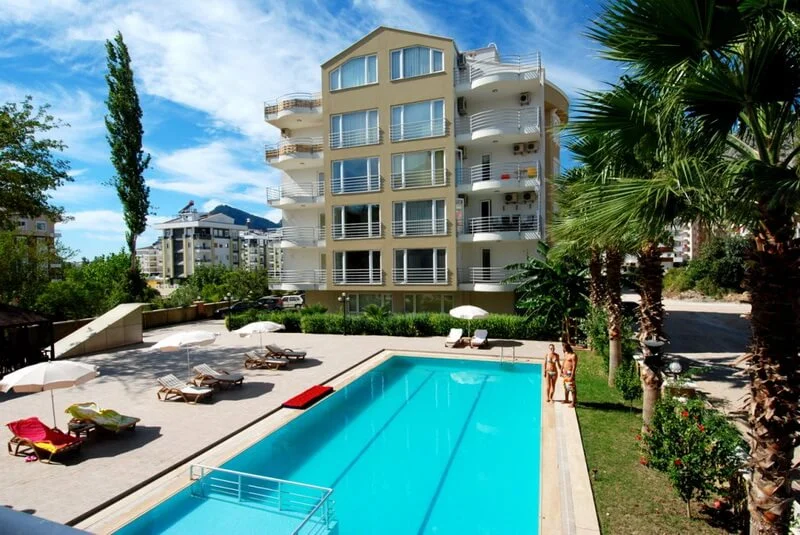
In apartment complexes, the site’s aidat (monthly owners’ fee under Condominium Law No. 634) covers shared lifts, lighting, security, and often the communal pool — not the interior of your unit. Private maintenance inside your door remains your responsibility unless your letting manager includes it in a separate contract.
Pool, Garden and Seasonal Services
Private pools on villas need regular chemistry balance, skimming, pump basket cleaning, and filter backwash. Standing water breeds algae within days in summer; an unattended pool can stain plaster and damage equipment. Winterisation may include lowered water level, chemical close-down, and pump protection where frost is possible inland.
Gardens in coastal Antalya or Aegean regions grow quickly from spring — irrigation solenoids, drip lines, and timer boxes need checks after power cuts. Uncut grass and leaf build-up block terrace drains and encourage pests. Tree roots can disturb paving if planting was too close to the house.
These services are almost always billed separately from a basic inspection retainer — specify visit frequency, chemicals included, and who holds pool keys and plant-room access.
Utility Bills and Property Checks
Utilities should be in the owner’s name after tapu — electricity (abone numarası with the regional distributor such as CK Boğaziçi, Gediz, or AEM), water, and gas where connected. Bills are in TRY; late payment can lead to disconnection.
Foreign owners commonly use:
- Turkish bank automatic payment (otomatik ödeme) linked to subscriber numbers
- Online portals of the utility company with card or transfer
- Manager payment — the maintenance firm pays on your instruction and invoices you with receipts
Aidat is paid to the site management’s official bank account — not personal staff accounts. Request receipts (makbuz) showing the period covered. Aidat is legally binding; arrears can restrict services or create recovery action under site rules.
During vacancy checks, record electricity and water meter readings so unexpected consumption — indicating a leak or unauthorised use — is visible early.
Handling Repairs and Emergencies
Repairs fall into three practical bands:
- Routine — scheduled trades (AC service, resealing showers, replacing tap washers)
- Urgent — active leak, no hot water, security breach, lift entrapment in a private villa lift (rare)
- Major — roof, structural crack, fire damage — insurer and engineer involvement
Remote owners should pre-authorise spending caps in the maintenance agreement (for example minor plumbing up to an agreed TRY limit without prior call). Above that, the manager obtains quotes with photos. There is no national standard emergency SLA — response depends on staff location, spare parts, and whether the issue is inside a complex governed by site rules.
Document every intervention: date, photos, invoice, and whether the repair is warranty, aidat, tenant damage, or owner cost. This paper trail matters for deposit disputes if the home is let.
Insurance and Damage Claims
DASK (compulsory earthquake insurance) covers structural damage from earthquake and certain linked perils within policy limits set annually by the Natural Disaster Insurance Institution. It does not replace household contents cover or routine mechanical breakdown of air conditioning.
Voluntary home insurance may add fire, theft, storm, water escape, and sometimes assistance call-outs (locksmith, boiler technician). Policy terms vary — read exclusions for unoccupied periods; some policies require notification if the home is empty beyond a stated number of days.
Claim steps (general): secure the property, notify insurer or DASK promptly, photograph damage before clearing, and use licensed adjusters where required. A local manager can meet inspectors on site; the owner usually signs forms or grants notarised authority. Your lawyer should review substantial settlements.
Managing a Property Remotely
Remote management works when reporting is concrete: inspection photos with dates, meter readings, paid bill receipts, open repair tickets with status, and a key access log.
Smart devices can supplement visits but do not replace physical checks of roofs, drains, and pools. Before long absences, ventilate appropriately, clear perishables, and confirm DASK and home policies are in date.
Working With a Maintenance Company
Since 2005, Maximos Real Estate has supported international buyers through purchase, construction coordination, and after-sales property care — inspections, bill coordination, and repair call-outs for owners who do not live in Turkey year-round. Scope is agreed in writing; it is not a generic promise to “handle everything.” If you also need letting, GIYKIMBIL reporting, or contract comparison, see our guide to choosing a property management company in Turkey.
When comparing providers, ask:
- What each visit includes (room list, meters, pool, garden, photos)
- Whether pool, garden, and AC servicing are in-house or subcontracted
- Fee model — monthly retainer, per visit, or time-and-materials repairs
- How emergencies are escalated on nights and public holidays
- Insurance — public liability while trades are on site
Major refurbishment — new kitchens, structural alterations, pool rebuild — belongs in a construction project with permits and staged payments. See Construction in Turkey and indicative budgets in Building Costs in Turkey before blending build and maintenance budgets.
Frequently Asked Questions
Can foreigners maintain property from abroad?
Yes, by appointing a local maintenance or management company under a written agreement, with optional Turkish bank payment authority and periodic photo reporting. You remain responsible for aidat, insurance renewal, and approving material repair spend unless pre-authorised limits are set.
Who checks a vacant apartment or villa?
Typically a caretaker, site staff (for external/common areas only), or your contracted maintenance firm for the interior and private garden/pool. The scope must be explicit — site security is not the same as an owner’s private inspection.
How are emergency repairs handled?
The maintenance firm should shut off water or power if needed, engage an approved plumber or electrician within agreed spending limits, and notify you with photos. Larger works wait for your approval unless the contract defines a higher emergency cap. Response times depend on location and availability — they are not regulated nationally.
Who pays utility bills?
The legal account holder — normally the owner — unless a tenant contract assigns specific utilities. Managers often pay on the owner’s behalf and reconcile with receipts. Aidat is an owner obligation even when the unit is empty.
Can insurance claims be managed remotely?
Yes, with a local representative meeting the adjuster, provided you hold valid DASK and any voluntary policy, grant authority where required, and submit documentation promptly. Structural earthquake claims follow DASK procedures; other perils follow your private insurer’s rules.
How often should air-conditioning systems be serviced?
Split units in heavy summer use typically need filter cleaning every few weeks in season and professional service at least annually before peak load — coastal dust and salt air clog filters faster. Neglected units leak condensate and consume more power. Service records help warranty claims.
Are pool and garden services usually separate?
Yes. Basic vacancy inspections may not include chemical pool balancing or lawn cutting unless bundled. Quote pool and garden as line items with visit frequency rather than assuming they are included in a minimal retainer.
Should maintenance agreements be reviewed carefully?
Yes. Define visit schedule, tasks, spending limits, subcontracting, reporting format, key custody, and termination. Your lawyer should review the agreement alongside letting contracts if the same firm also handles rentals — conflicts of interest and permit duties differ between pure maintenance and tourism letting.
Last updated: June 2026. Indicative guidance only — not legal, insurance, or technical advice.
Property Management Guides and Resources
Use these guides for maintenance, remote ownership checks, and selecting a property management company after you complete your purchase in Turkey.
- Current guide
Property Maintenance in Turkey
Learn how seasonal checks, utilities, repairs, insurance and pool care work for owners who live abroad.
Choosing a Property Management Company
Compare agreements, GIYKIMBIL duties, aidat handling, reporting and spending limits before you appoint a manager.