


e-Visa and tourist entry rules for Turkey in 2026
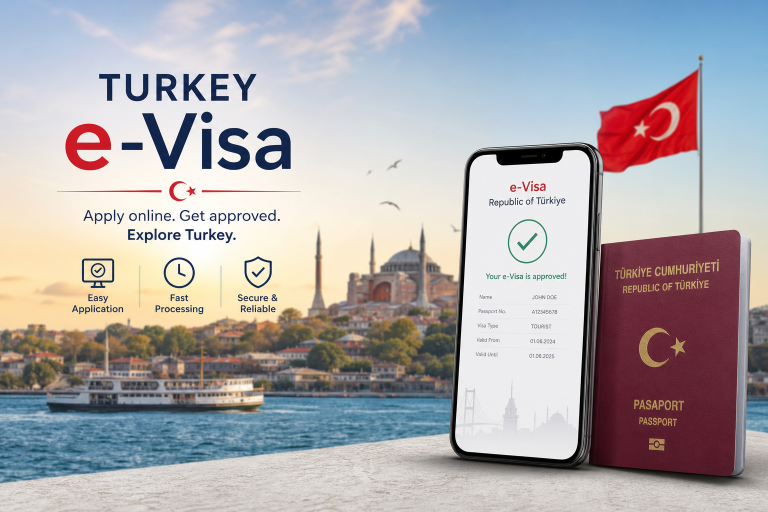
Turkey’s entry rules depend on your nationality, passport type, and purpose of visit. This guide explains tourist entry in 2026 — who needs a visa, how the e-Visa works, and how that differs from staying long term. It does not cover work permits, student permits, or property-based residence.
Confirm your status before travel on evisa.gov.tr and the Ministry of Foreign Affairs visa page. Rules change by nationality.
Do You Need a Visa for Turkey?
Not every visitor needs a visa. Turkey applies three main routes:
- Visa exemption — many nationalities may enter for tourism or business without applying in advance, usually for a limited period within a rolling window (commonly up to 90 days within any 180-day period, depending on country).
- e-Visa — eligible travellers apply online, pay a fee, and receive electronic approval linked to their passport.
- Sticker visa — obtained through a Turkish embassy or consulate, typically required for work, study, long stays, or nationalities not eligible for exemption or e-Visa.
Rules vary by passport type (ordinary, official, diplomatic), age, and supporting documents.
Do not rely on outdated blog lists. Use the MFA country table or the checker at evisa.gov.tr — select your country and passport type to see whether you are exempt, e-Visa eligible, or must apply at a mission.
Turkey e-Visa System
Turkey’s e-Visa is issued only through www.evisa.gov.tr. Applications are available 24/7 and usually take a few minutes once eligibility is confirmed and payment is made.
The e-Visa covers tourism and short business visits only. It is not valid for employment, paid work, academic study, or long-term residence. Study and work require appropriate visas obtained through Turkish missions before arrival.
You enter passport details and travel dates, pay the fee online, then download or print the approval. Border officers verify the record electronically. Keeping a printed or digital copy of the approval is advisable when travelling.
Some nationalities must hold a supporting visa or residence permit from another eligible country before an e-Visa is granted. Conditions appear in the portal after you select your nationality.
Use only evisa.gov.tr. Unofficial “visa help” sites are not authorised and may charge extra or issue invalid documents. For eligible travellers, the e-Visa is typically faster and simpler than an embassy appointment.
Tourist Visa vs Residence Permit
A visa (or exemption) and a residence permit serve different purposes. Confusing them is a common and serious mistake.
A visa allows entry. It authorises border crossing for a defined purpose and period — for example a short tourist or business stay. When that period ends, you must normally leave unless you have obtained a separate right to remain.
A residence permit allows legal long-term stay in Turkey. It is issued by the migration authorities for purposes such as property ownership, family residence, study, or employment.
Remaining after a tourist visa or exemption expires is unlawful presence. Repeated tourist entries are not a substitute for a residence permit if you intend to live in Turkey long term. Property purchase alone does not extend a tourist stay.
Property owners who wish to stay in Turkey beyond a short visit should review our guide to Turkey permanent residency, while investors interested in citizenship should refer to our Turkish citizenship by investment guide.
Property owners applying for Turkish citizenship should also review our guide to the documents required for Turkish citizenship, which explains apostille procedures, sworn translations and the paperwork commonly requested during the application process.
Entry visas and residence permits do not automatically lead to Turkish citizenship or a passport. If you need to stay beyond a short visit, you must apply for the correct permit through the migration authority — not rely on tourist status.
Passport Validity Requirements
Under Law No. 6458 (Article 7.1b), your passport must remain valid for at least 60 days beyond the duration of stay granted by your visa, e-Visa, exemption, or residence permit. If you are allowed 90 days, that means at least 150 days of remaining validity at entry.
The MFA also advises substantial remaining validity — often six months or more — because airlines and transit countries may apply stricter rules than Turkey’s legal minimum.
Additional conditions may apply: blank pages for stamps, machine-readable passports, or matching names across documents. The e-Visa portal shows extras after you select your country. Do not travel on expired passports unless official guidance explicitly permits it for your nationality.
Overstaying a Visa
Overstaying means remaining after your visa, e-Visa, exemption, or permitted stay has ended. Under Law No. 6458, unlawful presence can lead to administrative fines, deportation, and a temporary entry ban.
Voluntarily leaving through an official border and settling required charges before authorities detect the violation may reduce consequences in some cases. If officials identify the overstay first, or you remain well beyond your legal date, removal and re-entry restrictions become more likely.
Overstaying also harms future visa and border applications. If you need more time, apply for the correct residence permit while still lawful or leave before your status expires.
This is general information, not legal advice. For deportation notices or entry bans, consult a qualified immigration lawyer in Turkey.
Official Sources for Turkey Visa Information
Always verify requirements through official channels before you book travel. The Republic of Türkiye e-Visa portal at evisa.gov.tr handles online applications and eligibility checks. The Turkish Ministry of Foreign Affairs publishes country-by-country rules for visa exemptions, e-Visa conditions, and sticker visas issued through embassies and consulates.
Frequently Asked Questions
How do I check if I need a visa for Turkey?
Use the MFA visa page and evisa.gov.tr. Enter nationality, passport type, and travel dates. Do not use outdated third-party lists.
What is the difference between an e-Visa and a visa exemption?
An exemption lets you enter without applying or paying, within set time limits. An e-Visa requires online application and payment before travel. Neither replaces a residence permit.
Can I work in Turkey on an e-Visa?
No. The e-Visa is for tourism and short business visits only. Employment requires appropriate work authorisation obtained through official channels.
Can I study in Turkey on an e-Visa?
No. Study generally requires a consular visa before arrival and a student residence permit after entry. Visas are issued by Turkish embassies and consulates, not through the e-Visa portal.
How long can I stay as a tourist?
It depends on nationality and entry type. Many exemptions and e-Visas allow up to 90 days within a 180-day period, but limits differ. The MFA rule or stamp on your document is authoritative.
I bought property — can I stay on my tourist visa?
Ownership does not extend a tourist stay. Long-term legal residence requires a separate permit application through the migration authority.
What happens if I overstay?
You may face fines, deportation, and a ban on re-entering Turkey for a period set by migration law. Leave on time or apply for the correct permit before your status expires.
Does a tourist visa lead to citizenship?
No. A tourist visa or e-Visa is an entry document only. Citizenship is a separate legal process with its own requirements.


