

Turkish Citizenship by Investment: $400,000 Guide 2026
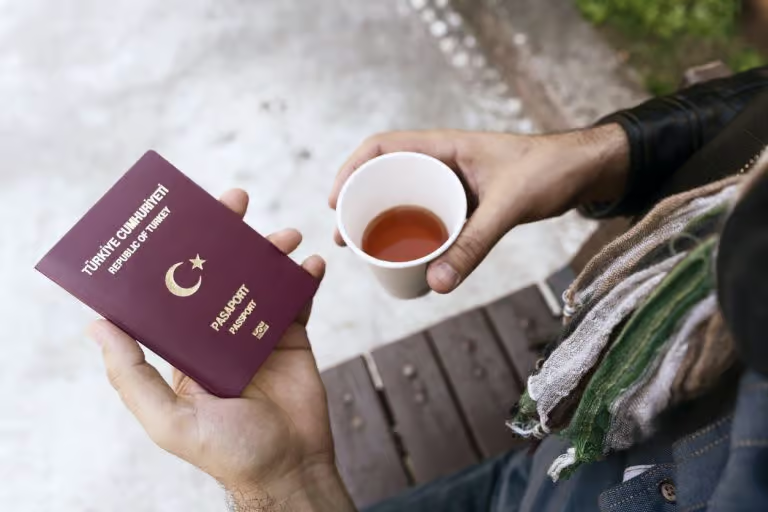
Turkish citizenship by investment lets foreign nationals and their families become Turkish citizens by purchasing real estate with an official appraised value of at least USD 400,000. The property must be held for a minimum of three years, with a no-resale commitment recorded directly on the Title Deed (TAPU). As of 2026, this is the most popular route to a Turkish passport, and property is the most accessible of the qualifying options.
As a real estate agency operating in Turkey since 2005, with offices in Istanbul and Antalya, Maximos Real Estate has guided more than 500 international families through this process. This page is the executive overview — for depth on each step, use the Citizenship Consultation Guides below.
Turkish Citizenship by Investment in 2026: The Essentials
The core rule is simple to state and easy to get wrong in practice. To qualify through real estate, you must acquire property whose official, SPK (Capital Markets Board) licensed appraised value is USD 400,000 or more — not the advertised sale price, but the government-approved valuation. The property is registered with a three-year resale restriction annotated on the title deed (tapu), the funds must arrive by documented bank transfer, and the property must be free of any mortgage or lien. Your spouse and children under 18 are included in the same application.
The real-estate threshold is USD 400,000 in 2026 *(raised from USD 250,000 in 2022)*. Sources citing lower amounts are out of date.
| Requirement | Detail |
|---|---|
| Minimum investment | USD 400,000 official appraised value (real estate route) |
| Valuation basis | Government SPK-licensed appraisal, not sale price |
| Holding period | 3 years (no-resale restriction recorded on the TAPU) |
| Payment | Documented bank transfer; property free of mortgage/lien |
| Family included | Spouse + children under 18, in one application |
| Multiple properties | Allowed — values can combine to reach $400,000 |
| Typical timeline | Approximately 3–6 months, subject to processing |
| Final approval | Granted by presidential decree — not automatic |
| Bank-deposit alternative | USD 500,000 held 3 years in a BDDK-regulated bank |
Turkish citizenship grants a passport with visa-free or visa-on-arrival access to a large number of countries, the right to live and work in Turkey, and dual citizenship (where your home country permits it). Final approval is granted by presidential decree — no agency or lawyer can guarantee an outcome.
Complete qualification rules → Eligibility handbook
Citizenship Consultation Guides
Each guide below answers one buyer question. If you are planning a property-route citizenship file, follow them in this order:
- Eligibility — Can I qualify?
- Timeline — When does each step happen?
- Costs — How much should I budget?
- Family — Who can be included?
- Rejection Prevention — What can go wrong?
Evidence checklists: documents required for Turkish citizenship. The sections below are an executive summary — each links to the authoritative handbook for depth.
How to Get Turkish Citizenship by Investment: Step by Step
Most property-route files follow a fixed sequence: confirm eligibility before purchase · obtain a tax number and open banking · pay by documented transfer with DAB · complete TAPU transfer with citizenship annotation · SPK valuation and certificate of conformity · investor residence permit · citizenship application · presidential decision.
Typical duration from purchase to decision is approximately 3–6 months, depending on document readiness and processing volumes — not a guarantee. Final approval rests with a presidential decree.
Full stage-by-stage guide → Timeline handbook · confirm qualification first → Eligibility handbook

Turkish Citizenship by Investment Requirements
On the property route you generally need: USD 400,000+ official appraised value *(not contract price alone)* · property in your personal name on TAPU · documented bank transfer with traceable FX documentation · clean title free of mortgage, lien, or dispute · 3-year no-resale annotation on the deed · spouse and children under 18 included in one application. You may combine multiple properties to reach the threshold.
Mortgage- or loan-financed amounts do not count toward USD 400,000. Company-held title does not qualify for this personal route.
Complete qualification rules → Eligibility handbook · who can join your file → Family handbook
Why Some Turkish Citizenship Applications Are Rejected — and How to Avoid It
Most serious problems are preventable before purchase: SPK appraisal below USD 400,000 · cash or untraceable payment · mortgage counted toward the threshold · ineligible property type · missing citizenship annotation on TAPU · document inconsistency · buyback or scam structures. Many authority messages cause delay and correction requests, not outright rejection.
We pre-screen citizenship-intended properties for valuation compliance, title eligibility, and payment structure before clients commit — because many mistakes cannot be fixed after purchase.
Prevention guide → Rejection Prevention handbook · qualification mistakes → Eligibility handbook
Frequently Asked Questions About Turkish Citizenship by Investment
Quick answers below — each topic has a dedicated handbook in the Citizenship Consultation Guides for full depth.
How much investment is required for Turkish citizenship in 2026?
USD 400,000 is the minimum official appraised value for the real estate route in 2026. The SPK-licensed government appraisal — not the contract price — determines eligibility. Eligibility handbook
Can I buy multiple properties to reach $400,000?
Yes. You can combine two or more properties registered in your personal name, provided their combined official appraised values total at least USD 400,000. Eligibility handbook
Does the official appraisal value matter more than the purchase price?
Yes. Eligibility is based on the SPK-licensed appraisal. A property purchased for $400,000 that appraises at $380,000 does not qualify, regardless of the sale price. Eligibility handbook
Can my spouse and children obtain citizenship too?
Yes. Your spouse and children under 18 are included in the same application at no additional investment threshold. Family handbook
How long does the process take?
Most completed files move through in approximately 3–6 months from property purchase to citizenship decision, depending on document readiness and processing volumes. Timeline handbook
Can I sell the property before three years?
No. A three-year no-resale restriction is recorded on the title deed. Selling before the holding period ends can jeopardise the citizenship. Eligibility handbook · Rejection Prevention
Is the $400,000 requirement likely to increase?
The threshold has changed before ($1M, then $250k, then $400k in 2022). No further increase is currently confirmed, but policy can change. Buyers acting now lock in today’s published requirement.
Can I obtain Turkish citizenship through a bank deposit instead?
Yes. An alternative route requires USD 500,000 deposited in a BDDK-regulated Turkish bank for three years. Property remains the most common qualifying option for international buyers.
Do I need to live in Turkey permanently?
No permanent residency in Turkey is required to maintain citizenship obtained through investment. You obtain a residence permit as part of the application process, but there is no ongoing minimum-stay condition tied to the citizenship itself. If you are still choosing between nationality and a renewable stay permit, see our citizenship vs residency comparison.
Can I keep my existing nationality?
Turkey permits dual citizenship. Whether you can retain your original nationality depends on the laws of your home country — many applicants hold both passports. Dual citizenship guide
Which mistakes commonly delay applications?
The most frequent delays come from appraisal shortfalls, untraceable payment trails, missing DAB certificates, incomplete translations, and title issues that should have been identified before purchase. Rejection Prevention handbook
Can I rent out the property during the holding period?
Yes. You may generate rental income during the three-year holding period, provided you do not sell the property before the restriction expires.
Is citizenship guaranteed after purchasing property?
No. Final approval is granted by presidential decree. A correctly structured application with clean documentation gives the strongest footing, but no agency or lawyer can guarantee an outcome.
What costs should I expect besides the investment amount?
USD 400,000 is the investment floor — not your total budget. Plan for closing costs, valuation, legal and translation work, government filing fees, and contingency. Costs handbook
Why do some applications get rejected?
Most rejections trace to preventable structuring errors before purchase — not bad luck. Rejection Prevention handbook
Can I obtain Turkish citizenship through an under-construction property?
Off-plan property can qualify when legally structured and reviewed before you pay — but weak contracts or valuation shortfalls often fail. Confirm before committing funds. Eligibility handbook
Costs Beyond the $400,000 Investment
USD 400,000 is the qualifying investment floor on official valuation — not your total cash requirement. Budget separately for purchase closing costs *(TAPU transfer, registry, DAB-related charges)* · SPK valuation · legal and translation work · residence and citizenship filing fees · passport issuance · and a contingency buffer. Most families plan well above the property price alone.
Full budget planner → Costs handbook · purchase fee tables → property purchase costs in Turkey
Documents Required for Turkish Citizenship by Investment
Citizenship files combine property evidence *(TAPU, TTB, DAB, bank receipts, conformity certificate)* with personal and family civil documents *(passports, birth and marriage certificates, police clearance where required)* — each prepared with correct apostille and sworn-translation order.
Complete checklist and validity windows → documents required for Turkish citizenship. Our legal partners review the full file before submission; this page does not duplicate that checklist.
Related Guides for Property Buyers in Turkey
Citizenship consultation guides: Eligibility · Timeline · Costs · Family · Rejection Prevention
Turkish citizenship by investment sits within a wider property framework. These guides cover surrounding steps. Buyers who later become Turkish tax residents should also review tax exemptions for foreign retirees and expats on qualifying foreign-source income — citizenship alone does not create the exemption.
- How to buy property in Turkey — the full purchase process for foreign buyers
- Property buying process in Turkey — step-by-step from reservation to title deed
- Property purchase costs in Turkey — taxes, fees, and ongoing ownership costs
- Law 7582 foreign income exemption — post-citizenship tax residency planning for foreign pensions, dividends and other offshore income (natural persons)
- Turkey permanent residency by investment — residency routes and how they relate to citizenship
- Lawyer services in Turkey — legal support for property and citizenship files
- Best areas to buy property in Istanbul — location guide for citizenship-eligible investments
- Property in Antalya — coastal and lifestyle investment options
Why Work With Maximos Real Estate
Maximos Real Estate has operated in Turkey since 2005, with offices in Istanbul and Antalya. We have guided more than 500 international families through citizenship-intended property purchases, working alongside legal partners involved in over 1,000 citizenship applications. That means we see the full picture — from property selection and appraisal readiness through to the documentation that determines whether a file succeeds.
We pre-screen citizenship-intended properties for valuation compliance, title eligibility, and registration status before our clients commit. We coordinate with vetted legal partners for the application file, and we stay involved through residence permit and citizenship submission. We do not guarantee outcomes — no one can — but we structure every case to give it the strongest possible footing.
Ready to explore citizenship-eligible property? Contact Maximos Real Estate to discuss your requirements, or browse our pre-approved citizenship listings in Istanbul and Antalya.
Start the consultation path → Eligibility handbook
Buyer Knowledge Hub
Use these core guides to understand Maximos, the buying process, citizenship options, and purchase costs before choosing a property in Turkey.
About Maximos Real Estate
Learn how Maximos supports international buyers with independent advisory, due diligence, and long-term property guidance.
How to Buy Property in Turkey
Follow the key steps foreign buyers should understand before reserving, checking, and completing a property purchase.
- Current guide
Turkish Citizenship by Investment
Review how citizenship-focused property purchases are evaluated, structured, and coordinated with legal professionals.
Property Purchase Costs in Turkey
Understand the main buyer costs, fees, taxes, and recurring ownership expenses before making a decision.